How to Measure a Window for Replacement: A Simple Step-by-Step Guide
Thinking about installing new windows? Before you call anyone, you want a rough idea of what size windows your home needs. Will a standard size fit? This guide shows you how to measure a window for replacement.
The good news: you don't need special tools. A tape measure, a pencil, and a few minutes per window will do the job. We'll explain what each number means and a few mistakes to avoid that can throw off your measurements.
QuickQuoteFinder makes getting an estimate easy. Tell us about your windows, and we’ll match you with one local window contractor serving your area. Get My Free Window Quote →
One thing up front. Your measurements are for planning and a ballpark quote. A good installer will take their own final measurements before anything gets ordered. More on that below.
What You'll Need
• A metal tape measure (a cloth one can stretch)
• A pencil and paper, or your phone's notes app
• A step stool or ladder for taller windows
• A flashlight, if the corners are dark
Write down every number as you go. Label each window by room, like "Kitchen, over sink" or "Upstairs bedroom, left." You might think you'll remember, but it's easy to mix them up.
The Parts of a Window and Its Frame
Window guides use a few words that trip people up. Here's what they mean:
• Jamb: the sides of the window frame.
• Head jamb: the top of the window frame.
• Sill: the bottom of the frame, where the window sits when it's closed.
• Stool: the interior ledge or trim piece below the window. (People often call this the sill, but it isn't!)
• Trim (or casing): the decorative boards around the window on the inside wall.
• Rough opening: the framed hole in the wall that the whole window unit sits in. You can't see it without removing trim.
Knowing what each of these terms means makes these measurement steps much easier to follow.
How to Measure Windows for Replacement: 4 Steps
You'll take all of these measurements from inside the house, with the trim left in place.
Step 1: Measure the width in three spots
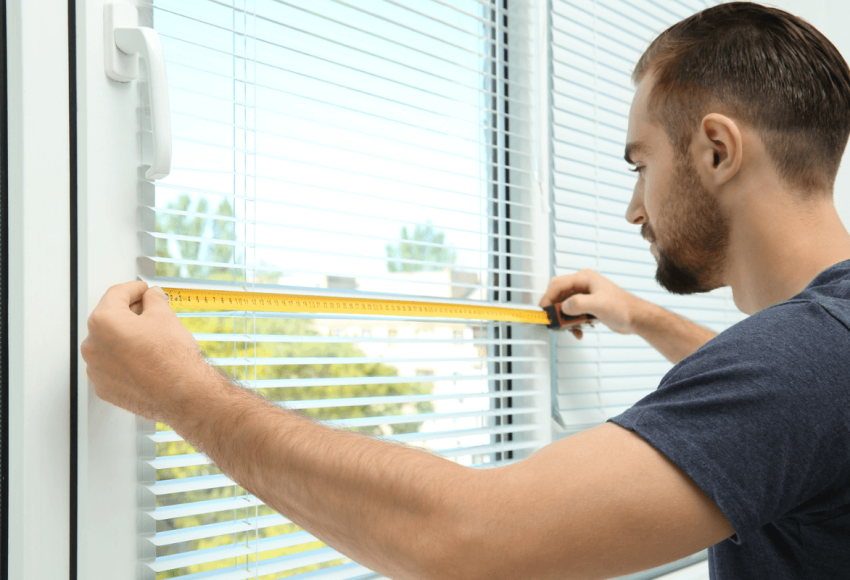
Measure from the inside of one side jamb to the other. Do it three times:
1. Near the top
2. In the middle
3. Near the bottom
A handy trick: take the top reading with the window closed, and the middle and bottom readings with it open, so the sash isn't in your way.
Round each number down to the nearest 1/8 inch. Then circle the smallest of the three. That's your width.
Why the smallest? Old frames are rarely perfectly straight. A window sized to the smallest spot will fit everywhere. A window sized to the largest spot might not fit at all.
Step 2: Measure the height in three spots
Measure from the top of the sill up to the underside of the head jamb. Again, do it three times:
1. On the left side
2. In the middle
3. On the right side
Make sure your tape starts on the sill, not the stool. Round down to the nearest 1/8 inch and circle the smallest number. That's the window height.
Reminder: the width always comes first when writing your width and height measurements. For example: 35 7/8" × 59 3/8". The width = 35 7/8". The height = 59 3/8".
Step 3: Check if the opening is square
Measure diagonally from corner to corner: top left to bottom right, then top right to bottom left.
If the two numbers are close, the opening is square enough for a standard replacement. Guides differ a little on how close is close enough. Some use a 1/8-inch difference as the cutoff for "square." Others say a gap of more than 1/4 inch means a standard replacement won't work.
If your diagonals are off by more than that, don't panic. It usually means the frame needs some repair, or you need a full-frame replacement instead of an insert. That's a call for a pro to make in person.
Step 4: Check the depth
Open the window. Measure the depth of the frame, from the back of the inside trim (or stop) to the outside stop.
Window guides commonly call for at least 3 1/4 inches for a typical insert window. If you have less, ask your installer about other options.
Insert vs. Full-Frame: Why It Changes the Measurement
There are two main ways to replace a window, and each requires the window to be measured differently.
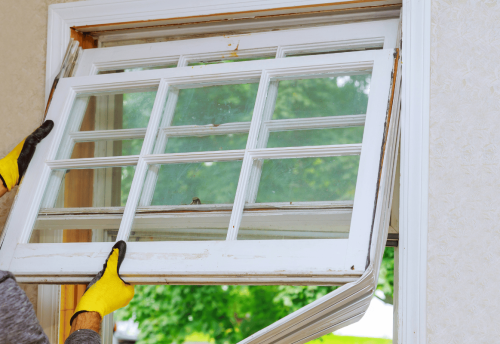
Insert (also called pocket) replacement. The new window slides into your existing frame. The old frame, trim, and siding stay put. This only works if the frame is solid, square, and free of rot. The steps above are for this type.
Full-frame replacement. Everything comes out, down to the rough opening in the wall. This is the fix when the frame is rotted, badly out of square, or you want a different size or style. To measure for full-frame, someone has to measure the rough opening, which usually means taking off trim. That's best left to the installer.
Not sure which you need? If your frames are soft, cracked, or water-stained, or your diagonals were way off, assume full-frame is on the table. A pro can tell you for sure.
Still deciding on a style? See our window types guide.
Common Measuring Mistakes
It can be easy to make a mistake while measuring the window on your own. Here are the most common mistakes that trip up homeowners:
• Measuring the trim instead of the frame. The trim is wider than the opening. Measure jamb to jamb.
• Starting on the stool. The height starts at the sill, not the interior ledge. (Refer to the parts of a window list if you're still confused!)
• Using the biggest number. Always use the smallest.
• Rounding up. Always round down.
• Measuring only once. One reading can miss a bowed or crooked frame.
• Assuming matching windows are the same size. Two windows that look alike can differ by a fraction of an inch. Measure each one.
• Mixing up width and height. Width goes first, every time.
Should You Measure Yourself or Let a Pro Do It?
Our expert advice is to do both.
Measuring yourself is worth it because it helps you understand what you have, spot problems like an out-of-square opening, and have a smarter first conversation with an installer. Learning how to measure a window for replacement also helps you notice if a quote seems way off.
But don't order windows based on your own numbers. Even a small error can leave a gap or a window that won't fit. There's an old piece of contractor wisdom here: let the supplier take the measurements, so a bad fit is their problem, not yours.
Installers typically measure when they come out to give you a quote, and might even send someone back for final measurements before ordering. That's the right setup. You get informed, and the pro takes responsibility for the fit.
Questions to Ask Your Window Installer
When a pro comes out, ask:
• Will you take final measurements before ordering?
• Is my frame in good enough shape for an insert, or do I need a full-frame replacement?
• Are any of my openings out of square? How will you handle it?
• Who's responsible if a window arrives the wrong size?
• How long between measuring and installation?
A good contractor will answer these without hesitation. Not sure yet whether your windows need replacing at all? Start with our signs you need new windows.
Frequently Asked Questions
Get Matched With One Trusted Window Pro
Now you know how to measure a window for replacement and what the numbers mean. The next step is having someone confirm them in person. Tell us a little about your home and your windows, and we'll match you with one trusted local window pro. One contractor, one conversation, no pile of sales calls.
Completely free, with no-obligation.