Window Types Explained: Which Is Right for Your Home?
Replacing windows is one of those projects that seems simple until you start shopping. There are a dozen different window types and frame materials. This guide breaks down the most common window styles, and walks through the vinyl vs. wood windows debate, so you can figure out what actually fits your house.
7 Popular Window Types
Window types are mostly defined by how they open, and that has a real effect on airflow, maintenance, and how well they hold up over time.
1. Double-Hung
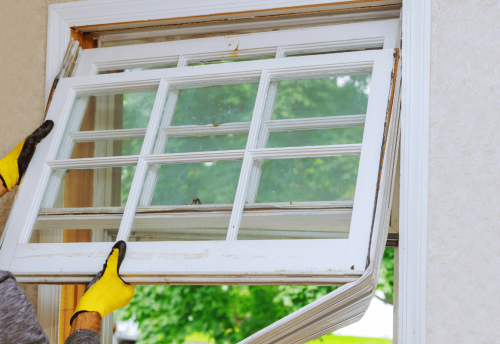
Double-hung windows are the style most people picture first. Both the top and bottom panels slide up and down, and most modern versions tilt inward for easy cleaning from inside the house. They're a safe, familiar choice for almost any home style, and they're usually the easiest to find in a range of pocket sizes.
2. Single-Hung
Single-hung windows are nearly identical, but only the bottom panel moves. They cost less than double-hung windows and work fine in rooms where you don't need much airflow control. The main tradeoff is they are harder to clean since the top panel is fixed in place.
3. Casement
Casement windows open outward on a hinge. They're cranked open like a door and seal tightly when closed, making them one of the best window types for energy efficiency. The outward swing catches breezes that a sliding window would miss.
4. Sliding
Instead of up and down, sliding windows move side to side on a horizontal track. They're a good fit for wide, low openings, such as over a kitchen sink or along a low wall, where a double-hung window might be hard to open.
5. Awning
Awning windows hinge at the top and open outward from the bottom. They're often paired with a larger picture window since they're small and work well up high or down low on a wall. Homeowners who prefer good airflow gravitate toward awning windows because they can leave them cracked open even during light rain.
6.Bay & Bow
Bay and bow windows are a cluster of three or more windows set at angles to create a small extension off the wall. They add floor space and natural light, and they're a common upgrade in living rooms and dining rooms during a full remodel rather than a simple swap-out job.
7. Picture
Picture windows don't open at all. They're pure glass, built for a view and for letting in light, usually paired with an operable window nearby for actual airflow.
Most homes utilize a mix of these different window types rather than just one style throughout.
Vinyl vs. Wood Windows
Once you've picked the window types you'd like to install, the bigger decision is the framing material. For most homeowners, that comes down to two choices: vinyl vs. wood.
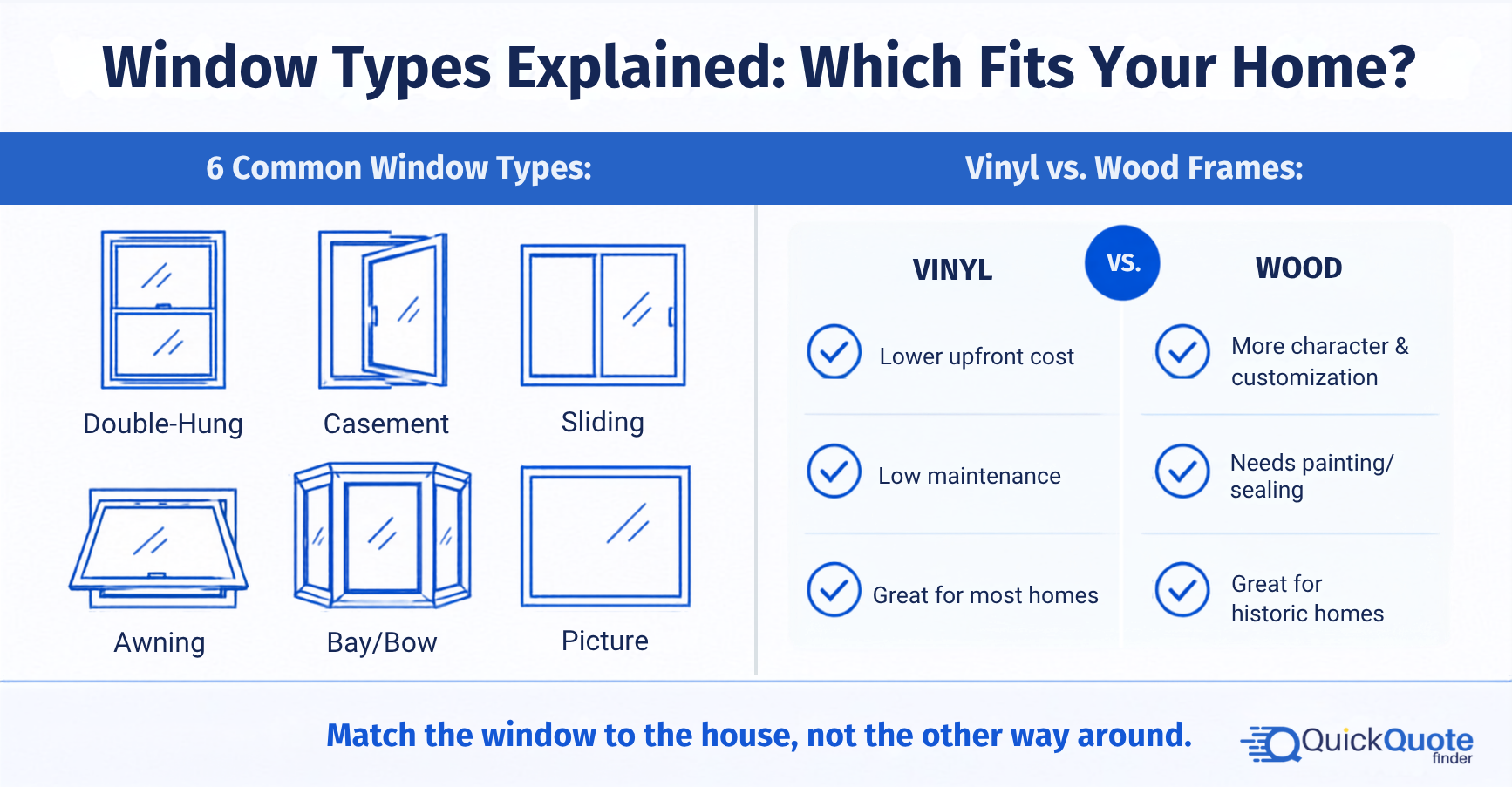
Vinyl windows are the most common type of replacement windows today. They don't need painting or sealing, and they hold up well against moisture and rot. They also tend to be more budget-friendly upfront. The tradeoff is look: vinyl doesn't have the same natural texture as wood, and while color options have improved, it can't be repainted the way wood can if you want to change your home's look down the road.
Wood windows bring a warmth and character that vinyl can't fully match, especially in older or historic homes where the original windows were wood. They can be sanded, stained, or repainted whenever you want a change. The catch is the upkeep; wood needs regular painting or sealing to keep moisture out. Without that maintenance, wood windows are more prone to rot and warping than vinyl.
Vinyl vs. Wood Windows Comparison Chart
There isn't a universally "right" answer in the vinyl vs. wood windows debate. It really depends on your budget, how much maintenance you're willing to take on, and what style you're going for.
Choosing the Right Window Types For Your Home
Beyond style and material, here are some practical considerations to factor into your decision before settling on the best windows for your home:
Climate
What's the weather like where you live? Homes in cold climates benefit from tighter-sealing styles like casement windows and from double- or triple-pane glass. Homes in hot, sunny climates need low-E coatings that block heat without darkening the room.
Architecture
Consider your home's design. A craftsman or colonial home looks better with double-hung windows that match the original proportions, but more modern homes have more flexibility to mix in casement or picture windows.
Room/Uses
Think about the room and how it will be used. A bathroom or kitchen near a sink often benefits from a crank-open casement or awning window that's easy to operate one-handed. A bedroom usually needs a reliable double-hung or single-hung window. A foyer or entryway with vaulted ceilings doesn't even need to be operable, so a picture window works fine.
Budget
Finally, factor in your budget. The frame material usually impacts the price more than the window style alone, which is exactly why choosing between vinyl vs. wood windows early on can help paint a clearer picture of how much your project may cost.
Feeling stuck? QuickQuoteFinder can connect you to a licensed window installer in your area who is ready to help. Answer a few questions about your window project, and we'll match you to a contractor serving your area who can guide you toward the windows that make the most sense for your home.
Find a Trusted Window Company For Your Home
Answer a few questions about your project and we'll match you to the top-rated window contractor in your area for free.
1
2
3
Answer Some Questions
Enter Your Zip
Code
Match With a Local Pro
Connect with a certified window installer in Ohio and receive a free, no-obligation quote.
Frequently Asked Questions
Get Matched With a Local Window Pro
Figuring out the window types that best fit your home is the easy part. Finding someone you can trust to do the job is where most homeowners get stuck. We'll help connect you to a local contractor for free.