The Bathroom Style Guide: 7 Looks and How to Pick Yours
The seven bathroom styles most homeowners choose from in 2026 are modern, transitional, modern farmhouse, Japandi spa, coastal, industrial, and classic vintage. The one that will look right in your house is usually the one that matches its architecture and its light — not the one with the most saves on Pinterest.
Here's the trap almost everyone falls into. You collect 40 photos you love, hand them to a contractor, and discover they belong to four different styles, three different budgets, and a house that looks nothing like yours. The tile in the photo works because of a window you don't have.
This guide does it in the other order. First we'll match style to house. Then we'll walk through all seven looks — materials, finishes, what each one actually costs to build, and the honest downside of each.
Already know the look you want? Tell us about your project, and we'll match you with a vetted local bathroom contractor who works in your area. Free, no obligation, and most homeowners get a personalized quote back within 24 hours. Get my free bathroom quote →
Start With Your House, Not Your Feed
A bathroom that fights its house always looks slightly off, even when every individual choice is beautiful. The American housing stock spans about 120 years of architecture, and each era wears certain styles comfortably.
Two other inputs matter as much as the architecture:
1. Your light. North-facing bathrooms and windowless interior baths run cool and dim. Cool gray tile in a windowless bathroom reads gray-green and slightly grim at 7 a.m. Warm styles — farmhouse, Japandi, vintage — carry those rooms better. A south-facing bathroom with a real window can take cooler, crisper palettes.
2. Your size. Under 40 square feet, busy patterns and heavy furniture-style vanities eat the room. Small bathrooms do best with continuous flooring, a floating or leggy vanity, and pattern concentrated in one place.
The 7 Bathroom Styles
Cost notes below are relative to a mid-range full remodel, which runs $10,000 to $25,000 in 2026 for a standard bathroom. For the full breakdown, see our 2026 bathroom remodel cost guide.
1. Modern
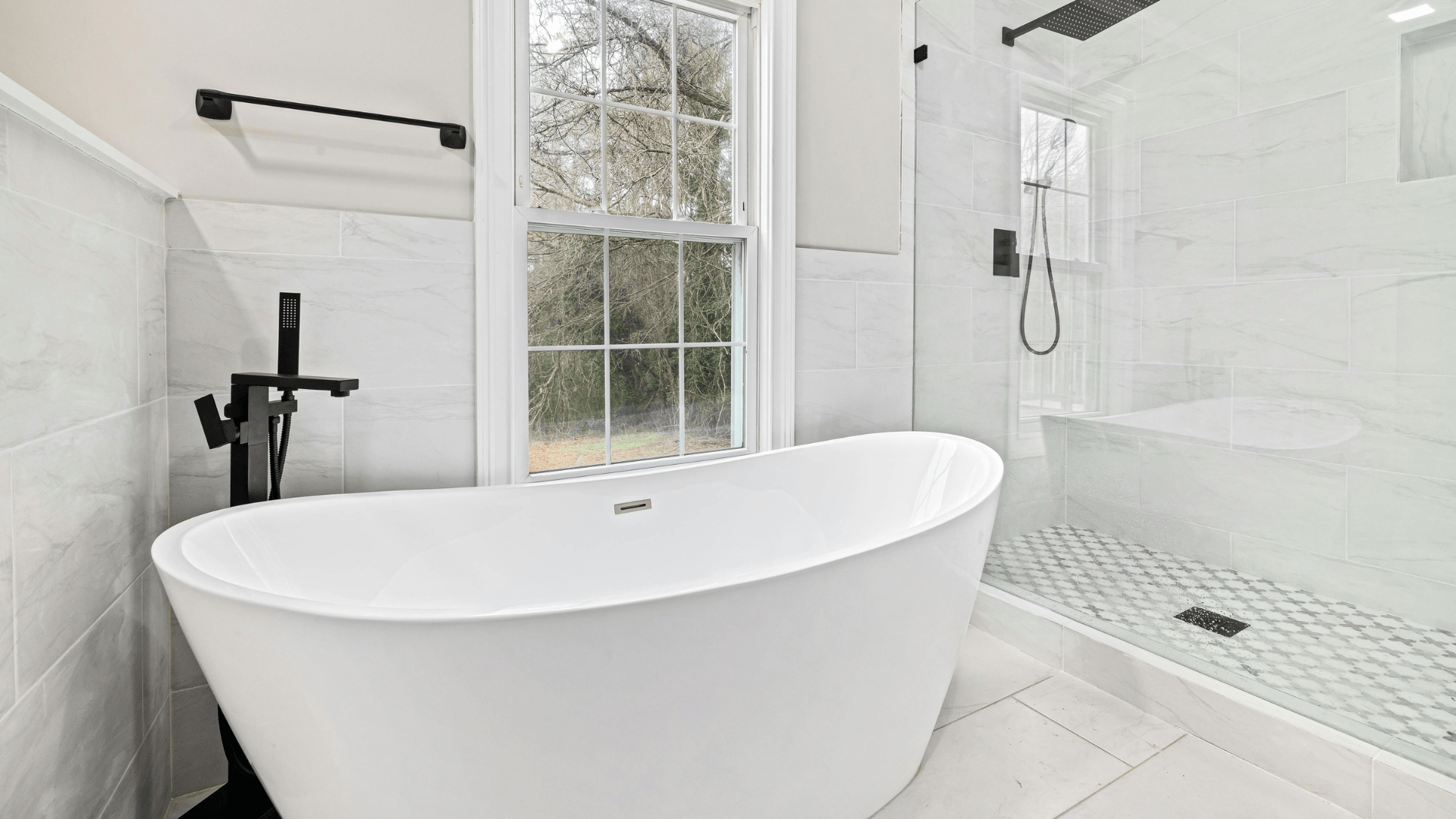
The look: Flat-front cabinetry, unbroken surfaces, and as few visible lines as possible. Nothing is decorative; everything is simple.
Materials and palette: Large-format porcelain (24" x 48" and up) to minimize grout lines. Charcoal, bone, warm white, and one deep accent. Solid-surface or quartz counters.
Fixtures and finishes: Matte black or gunmetal. Wall-mounted faucets, integrated or rectangular vessel basins, frameless glass, linear drains, backlit mirrors.
Best for: Ranches, mid-century homes, new builds, and small bathrooms — fewer grout lines genuinely make a small room read larger.
Cost signal: Middle to upper. Large-format tile costs less in labor per square foot than mosaic, but modern's tolerance for error is brutal — flat walls, level substrate, and precise reveals all take skilled time. Curbless entries and linear drains add $1,500 to $3,000.
The honest downside: Modern shows everything. Water spots, dust, and a single crooked reveal. If you're a low-maintenance household, temper it with a slightly textured floor tile.
2. Transitional
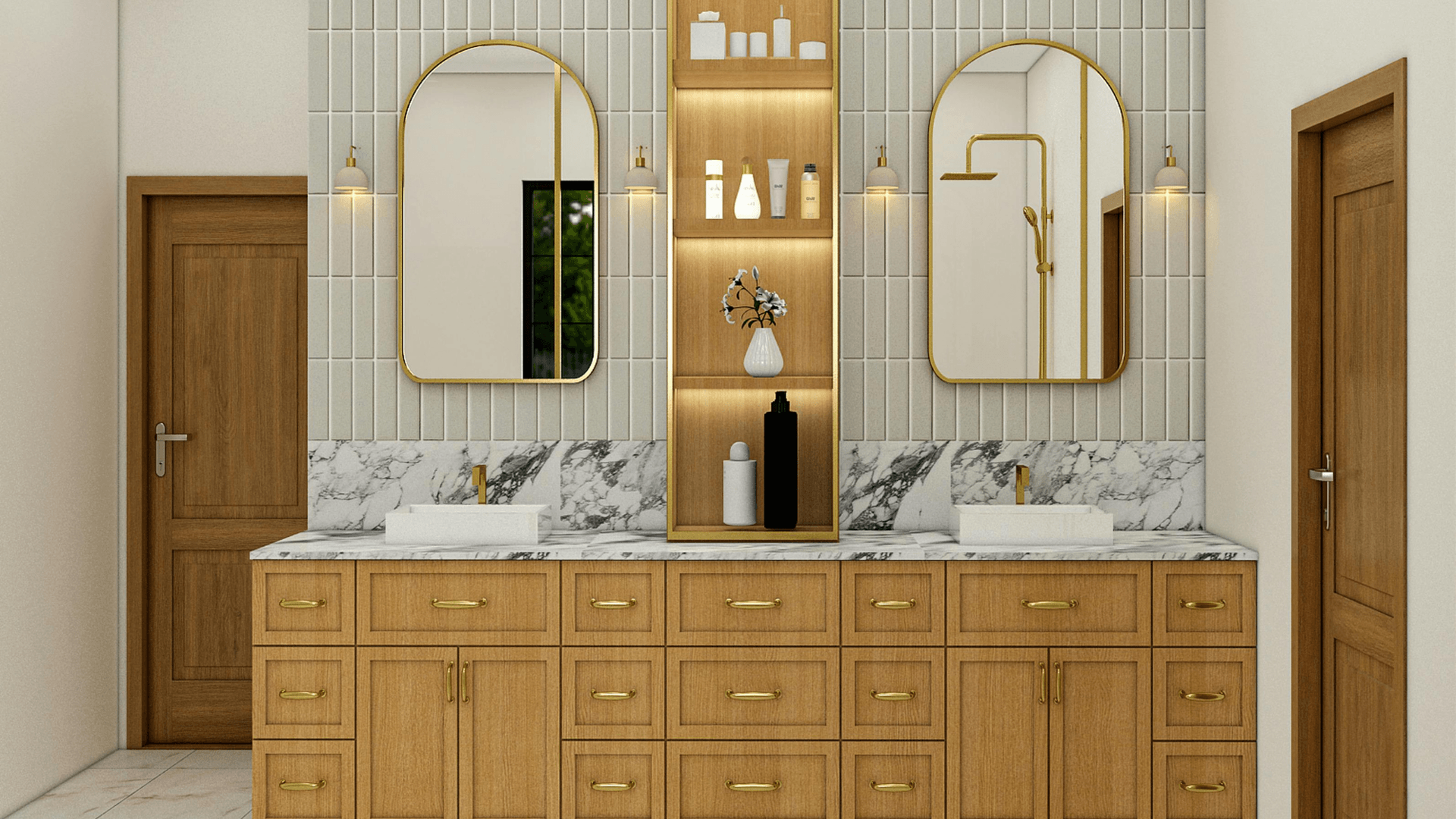
The look: The middle ground between traditional and modern, and by a wide margin, the most common bathroom built in America. Clean lines with a little softness — shaker doors, simple profiles, no ornament.
Materials and palette: Subway or lightly textured tile, quartz counters, greige and soft blue-gray cabinetry, warm white walls.
Fixtures and finishes: Brushed nickel or brushed brass. Undermount sinks, framed mirrors, semi-frameless glass.
Best for: Almost any house built after 1980, and any homeowner planning to sell within five years.
Cost signal: The value pick. Every material in a transitional bathroom has an affordable and a premium version, so it better fits a budget than any other style here.
The honest downside: It's safe. Transitional rarely produces a bathroom anyone remembers — which is exactly why it's the right call when resale is the goal and the wrong call when you're building your forever house.
3. Modern Farmhouse
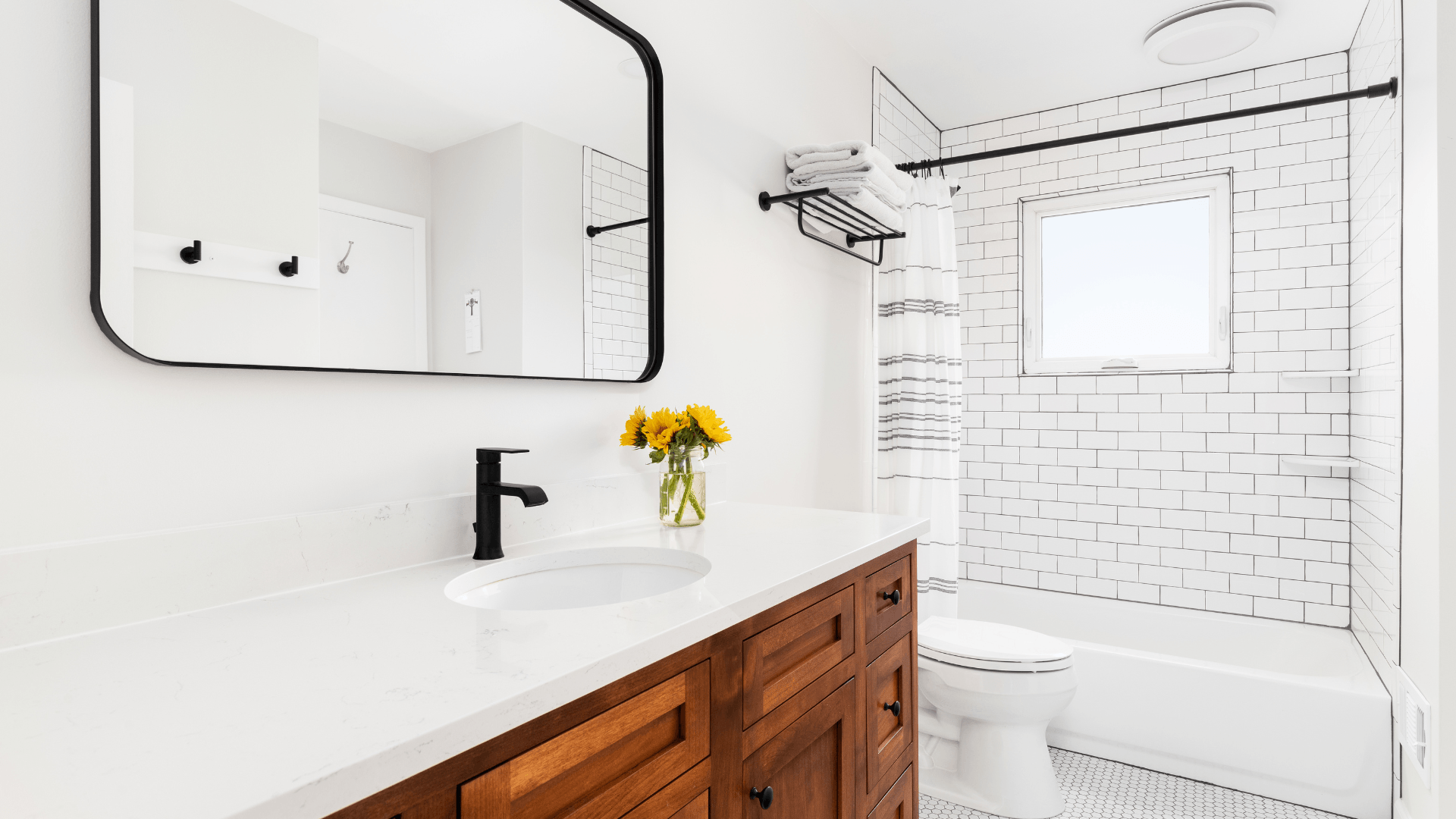
The look: Warm wood against crisp white, black hardware, shiplap or beadboard, and a freestanding tub if the room can hold one.
Materials and palette: White subway tile, warm oak or walnut vanities, black-and-white patterned or penny floor tile, butcher block or white quartz counters.
Fixtures and finishes: Matte black. Apron or wide-basin sinks, round black-framed mirrors, barn-style or simple shaker cabinetry, exposed-bulb or lantern lighting.
Best for: Suburban colonials, cape cods, and actual farmhouses. It's the most forgiving style on this list for a bathroom with mediocre natural light.
Cost signal: Middle. The materials are widely available and affordable, but a freestanding tub adds $1,200 to $4,000 installed, plus the floor space to justify it.
The honest downside: It's the most trend-exposed style here. The version built in 2018 already reads dated. Keep the permanent surfaces simple and put the farmhouse character in hardware, lighting, and mirrors, which you can swap in a weekend.
4. Japandi Spa
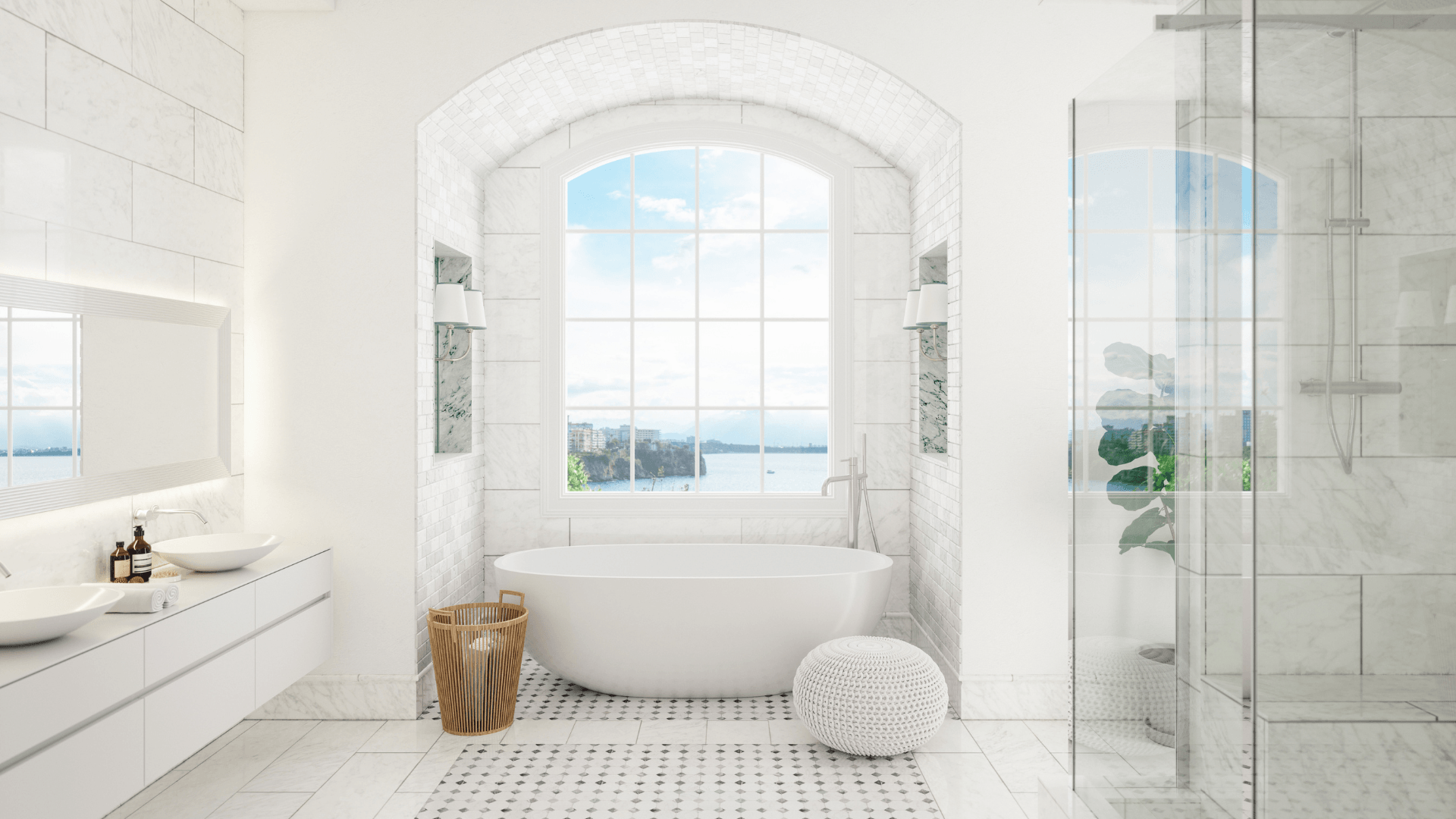
The look: Japanese restraint plus Scandinavian warmth. Low, calm, and material-driven — the room feels quiet.
Materials and palette: Warm limewash or plaster walls, vertical stack-bond tile, light oak, honed stone, linen. Every color is a warm neutral.
Fixtures and finishes: Aged or unlacquered brass. Stone or ceramic vessel basins, round mirrors, deep soaking tubs, teak accessories, hidden storage.
Best for: Homeowners renovating for themselves rather than for resale, primary bathrooms, and anyone who wants the room to feel like a decompression chamber.
Cost signal: Upper. Not because the palette is expensive, but because Japandi hides everything — no visible hardware, integrated storage, seamless plaster, minimal reveals. Concealment is carpentry, and carpentry is hours.
The honest downside: Warm minimalism only works if the storage is genuinely sufficient. One bottle of shampoo on the counter breaks the whole spell, so plan the niches and drawers before you plan the finishes.
5. Coastal
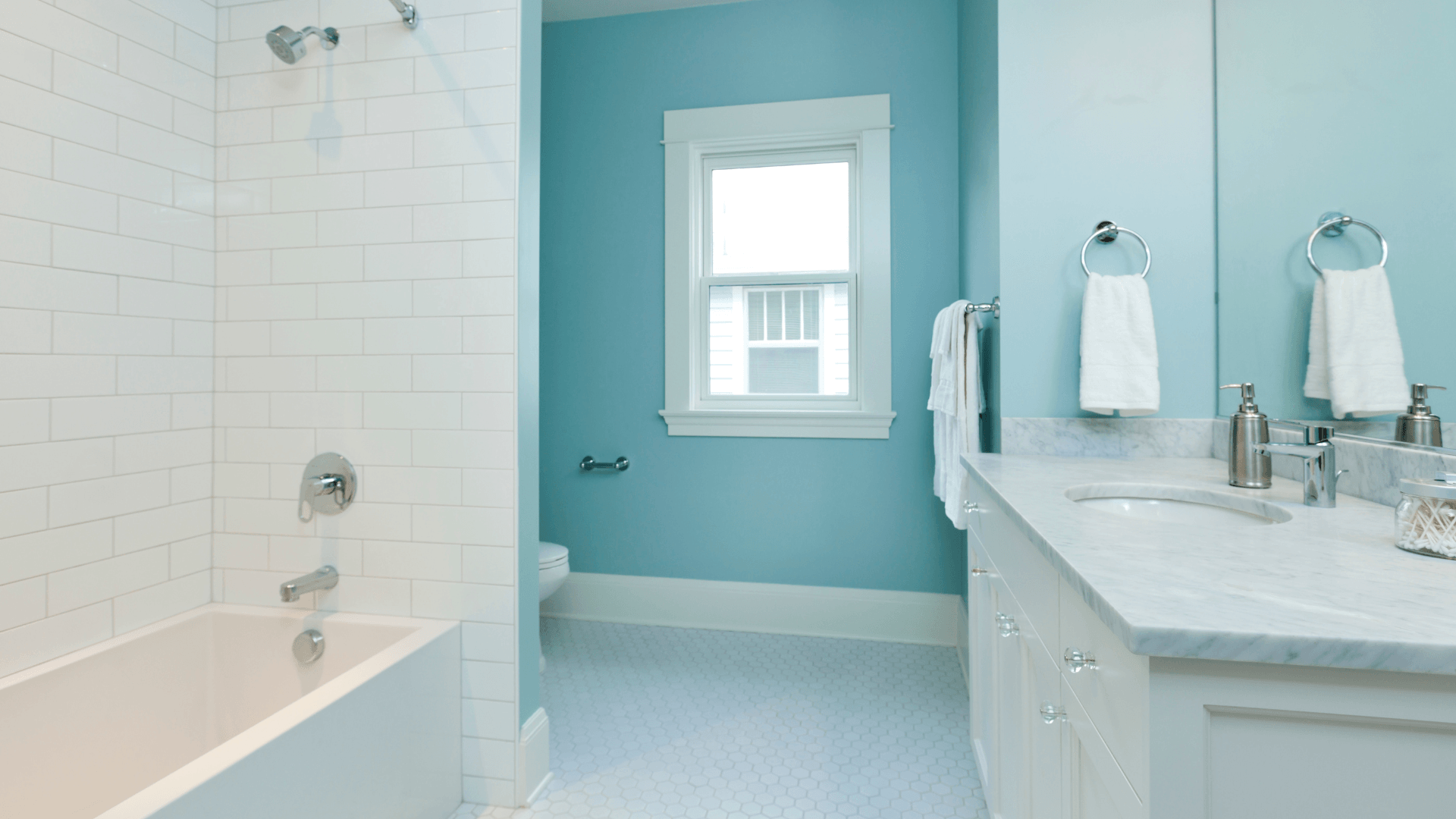
The look: Light, airy, and slightly imperfect. Handmade tile with visible variation, pale blue or seafoam cabinetry, woven and natural textures.
Materials and palette: Zellige or hand-glazed tile, white penny or hex floors, soft blues and greens, warm white walls, rattan and jute accents.
Fixtures and finishes: Polished nickel or chrome. Arched mirrors, pedestal or leggy vanities, simple shaker doors, plenty of open light.
Best for: Lake houses, cottages, capes, and bathrooms with real windows. It needs natural light to work.
Cost signal: Middle to upper, and it depends almost entirely on the tile. Handmade zellige costs several times as much as machine-made ceramic per square foot and installs slower because no two pieces are identical. Use it on one wall or in the niche and use a quality machine-made tile everywhere else — this is the single most effective cost lever in the whole style.
The honest downside: Coastal tips into theme very easily. Skip anything shaped like an anchor, a starfish or a rope. The style should come from color and texture, not from motifs.
6. Industrial
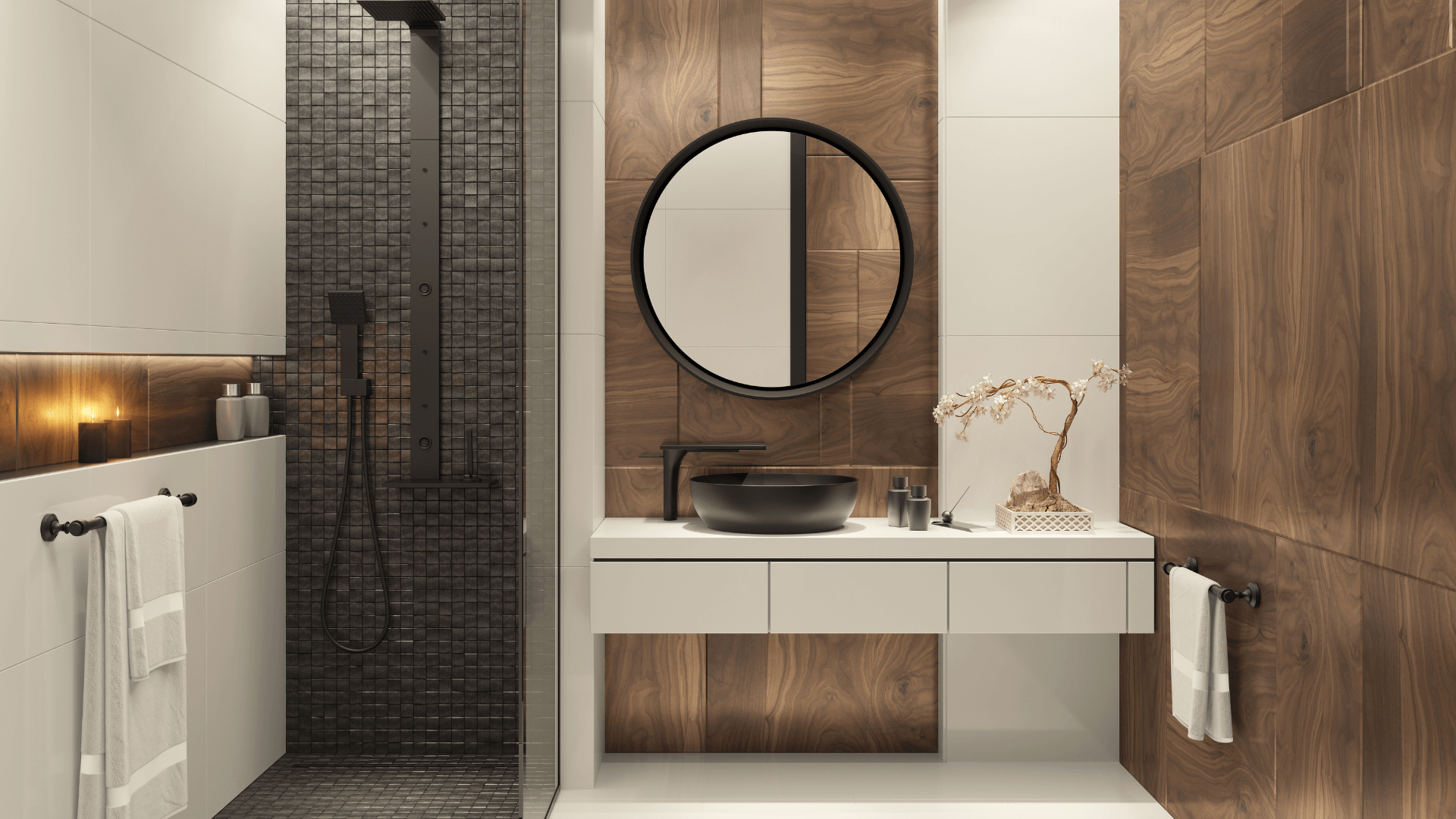
The look: Structural and unfinished-looking on purpose. Concrete, dark tile, black metal, exposed fixtures.
Materials and palette: Concrete or microcement surfaces, dark green or charcoal tile, reclaimed wood, blackened steel. Palette is gray, black, and one deep saturated color.
Fixtures and finishes: Matte black and raw steel. Black grid shower screens, exposed pipework, console vanities on metal legs, wall-mount faucets, cage or dome lighting.
Best for: Lofts, converted spaces, basement bathrooms, and modern homes with tall ceilings.
Cost signal: Varies more than any other style. Simple industrial is cheap. Black grid screens, microcement application and custom metalwork are not — a fabricated grid screen alone can run $2,000 to $5,000.
The honest downside: Dark rooms need serious lighting design, and industrial is the least accommodating style for a small windowless bathroom. Also, concrete surfaces need sealing and resealing. Ask specifically about maintenance before you commit to microcement.
7. Classic Vintage
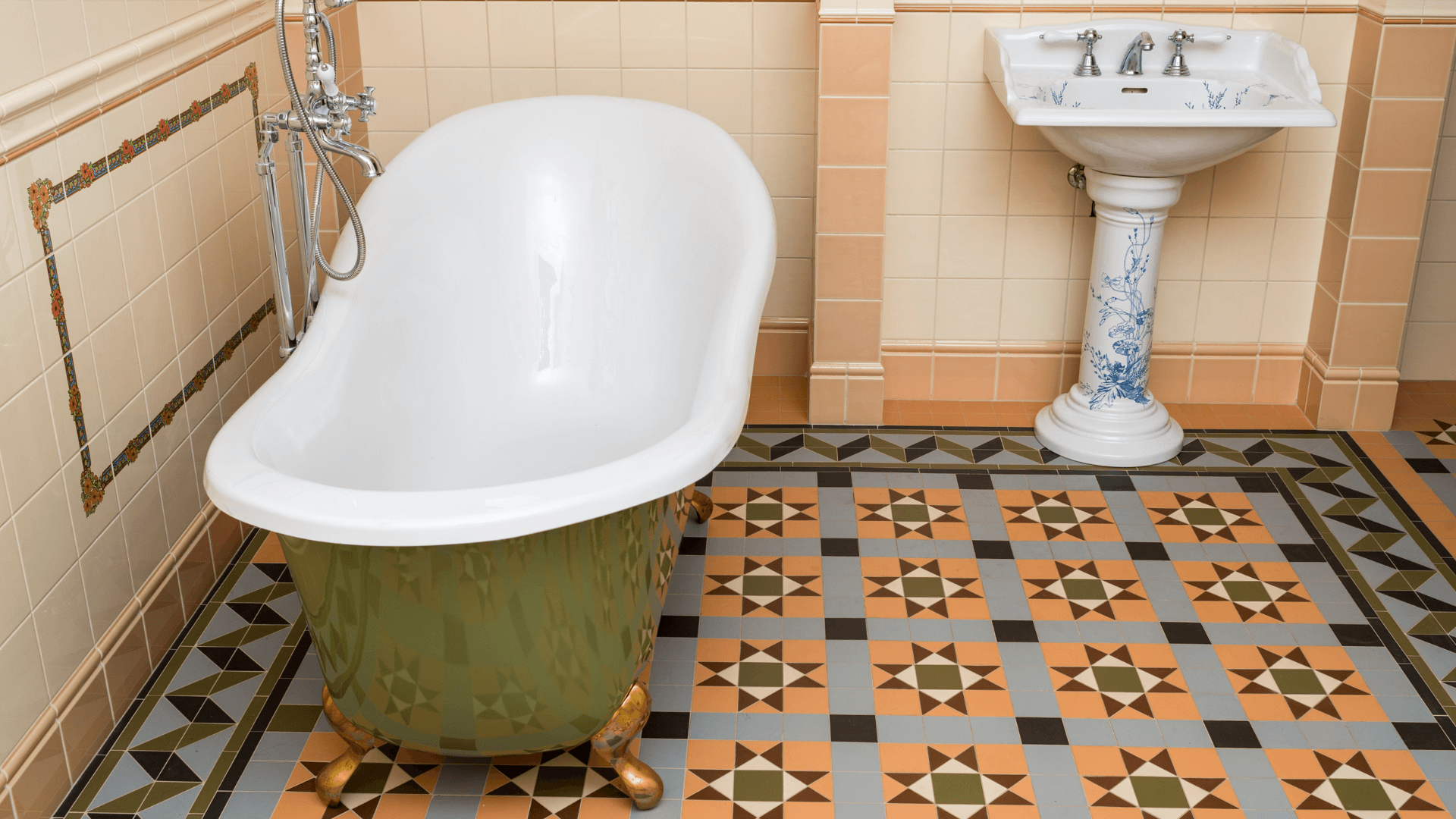
The look: Period detail done sincerely — checkerboard or hex mosaic floors, wainscot, a furniture-style vanity, a clawfoot or slipper tub.
Materials and palette: Small-format mosaic floors, white subway tile with a contrasting liner, marble or marble-look counters, deep saturated cabinet colors — navy, oxblood, forest.
Fixtures and finishes: Polished or unlacquered brass, sometimes chrome. Cross-handle faucets, pedestal sinks, arched or ornate mirrors, exposed plumbing done deliberately.
Best for: Homes built before 1950 — and there's no shortage of them across the country. In a 1915 foursquare or a prewar colonial, this style stops looking like a choice and starts looking original.
Cost signal: Upper. Small-format mosaic floors are labor-heavy, a clawfoot tub needs floor-mount plumbing, and period-correct fixtures carry a premium. Budget more for labor than for material here.
The honest downside: Clawfoot tubs are lovely and awkward. They're hard to shower in, they need a surround curtain, and they're difficult to clean around. If you want the look without the daily friction, use a period-styled alcove tub instead.
What's Changing in 2026
If you want the room to age well, this is the direction the industry has moved.
Ins:
Warm whites and warm neutrals. Designers have moved away from stark cool white toward soft creams and mineral whites, paired with honed stone and warm wood.
Earth tones. Beige, terracotta, clay, and muted greens like sage and jade.
Texture you can feel. Handmade, zellige-style, and lightly textured tile in place of flat, uniform surfaces. Limestone and travertine looks are dominant.
Warm metals. Brushed bronze, aged brass and unlacquered brass.
One expressive moment. A characterful tile or a boldly veined stone in a niche, behind the basin, or framing an arch — with restrained material everywhere else. This is the practical version of the trend, and it's a lot cheaper than tiling the whole room in the expensive stuff.
Outs:
Stark cool whites and gray-on-gray palettes
All-chrome, everything-matching fixture sets
High-contrast black-and-white schemes with no warmth
Features that photograph better than they function
Three Rules That Keep a Style From Going Wrong
1. Keep the permanent stuff calm; put personality in the swappables. Tile, counters, and cabinetry stay with you for 15 years. Paint, mirrors, lighting, hardware, and textiles are a weekend and a few hundred dollars. Nearly all of a style's character can live in that second group.
2. Two metals, maximum. Pick a primary finish for plumbing fixtures and a secondary for lighting, hardware, or the mirror frame. Three or more reads as accidental rather than layered.
3. Pattern goes in exactly one place. Keep it on the floor, or the shower wall, or the niche, but not all three. When everything competes, nothing reads.
Not sure which style your house will carry? A contractor who works in your area has seen a hundred bathrooms like yours. Tell us about your project, and we'll match you with one qualified local bathroom pro who can view your space and tell you what will actually work in it — free, with no obligation
Does Style Change What Your Remodel Costs?
Yes, but less than most people expect. Style drives maybe 10% to 20% of a typical budget; scope drives the rest. Moving plumbing costs the same whether the room ends up farmhouse or Japandi. Within a style, these are the choices that genuinely move the number:
If you like an expensive style on a mid-range budget, the move is always the same: spend it on one visible surface and buy quality machine-made versions of everything else.
Frequently Asked Questions
Get a Quote for the Bathroom You Actually Want
Style is the fun part. Getting it built correctly — waterproofed, level, code-compliant, and finished the way it looked in your head — is the part that needs a good contractor.
Tell us what you're planning and where you live, and we'll match you with a vetted bathroom contractor serving your area who's ready to take the project on. No calling around, no obligation.
Most homeowners hear back within 24 hours.