What Should a Bathroom Remodel Cost in 2026?
Most homeowners spend between $10,000 and $25,000 on a full bathroom remodel in 2026, with a national average near $12,000. Cosmetic refreshes start around $3,000, and primary-suite renovations run $45,000 and up. Your final price comes down to three things: whether you move plumbing, what you do with the shower, and the materials you pick.
That range is wide, and there's a reason nobody can hand you one tidy number. A powder room getting a new vanity and a primary bath getting a curbless tiled shower are not the same project — they just share a name.
So instead of an average, this guide gives you a ladder. Find the rung your project sits on, see what belongs in that price, and learn which decisions quietly move you up a rung. Then you'll know whether the estimate in front of you is fair.
Skip the research spiral. Tell us about your bathroom and we'll match you with a vetted local bathroom contractor who works in your zip code. It's free, there's no obligation, and most homeowners have a personalized quote back within 24 hours. Get my free bathroom quote →
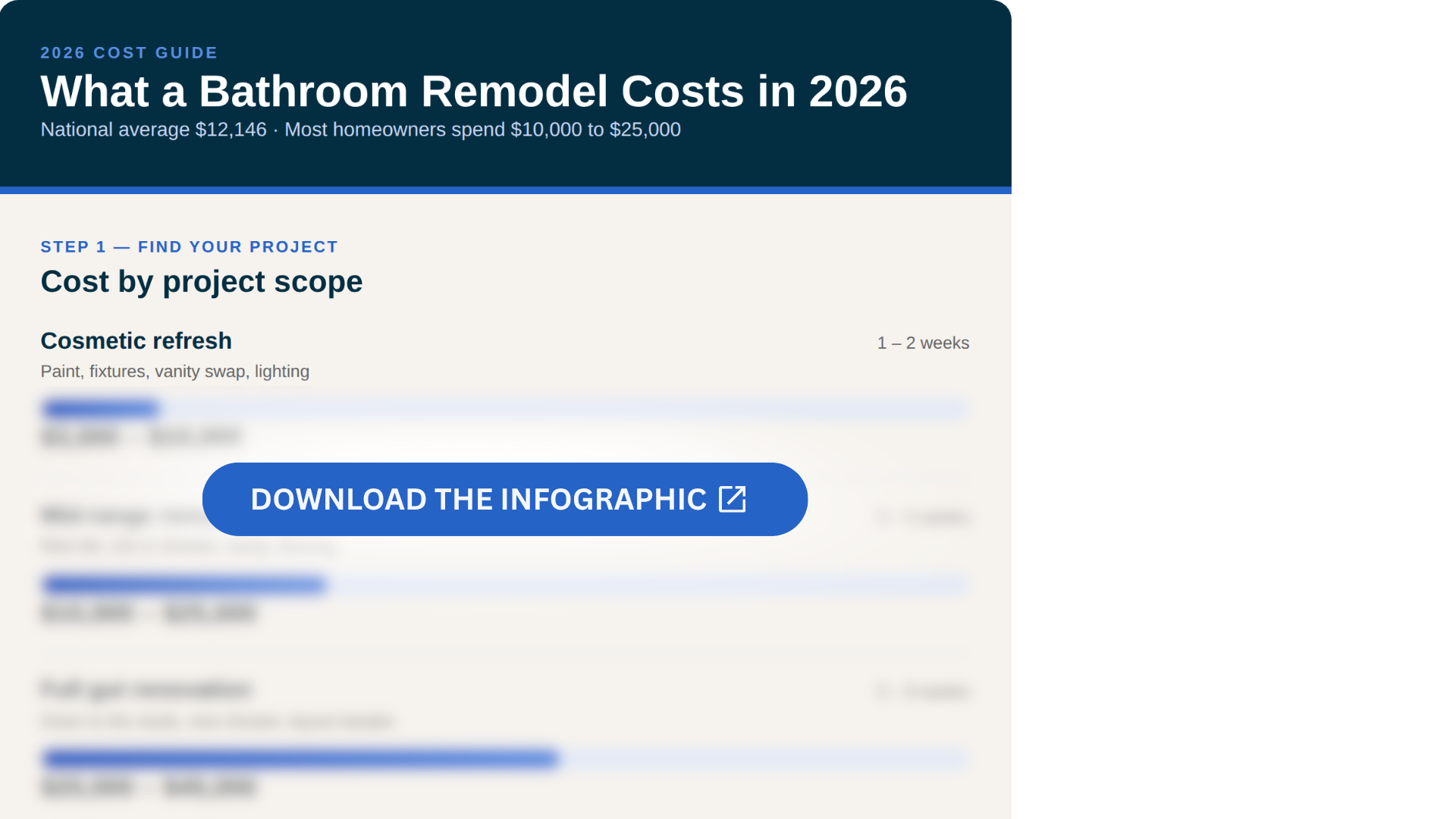
2026 Bathroom Remodel Cost at a Glance
Ranges reflect 2026 national cost data from Angi, NerdWallet and This Old House. Angi puts the national average bathroom remodel at $12,146, or roughly $70 to $250 per square foot.
Why "Cost per Square Foot" is Misleading for Small Bathrooms
Per-square-foot pricing is the first number most homeowners find, and it's the least useful one they'll see.
A bathroom is the most trade-dense room in a house. A 35-square-foot bathroom still needs a plumber, an electrician, a tile setter and a finish carpenter. It still needs one toilet, one vanity, one exhaust fan and a fully waterproofed shower. Those costs barely shrink when the room does — so the smaller the bathroom, the higher the cost per square foot looks.
Use square footage for a sanity check, not to build your budget. Scope is what actually sets your price.
Typical Full-Remodel Cost by Bathroom Size
Half baths and powder rooms sit well below all of these — usually $2,500 to $7,000 — because there's no shower or tub, and waterproofing is the expensive part.
Where the Money Actually Goes
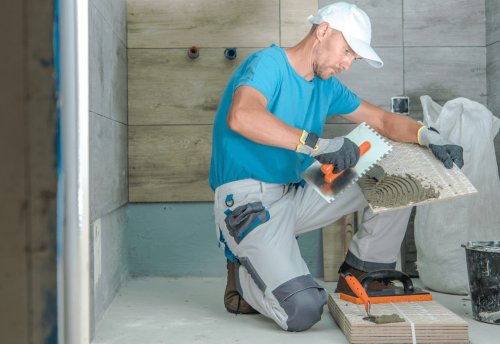
Homeowners are almost always surprised by the split. You're not mostly buying tile and a vanity. You're mostly buying skilled hours.
Labor: 40% – 65% of the total. Plumbing, electrical, demolition, tile setting, waterproofing and finish work. (NerdWallet, 2026)
Materials and fixtures: 35% – 60%. Tile, vanity, countertop, toilet, tub or shower, glass, lighting and hardware.
A few line items worth budgeting separately:
What's Increasing 2026 Estimates
Bathroom pricing rose roughly 4% to 6% over 2025, and it's worth knowing why — because it tells you where you have leverage.
1. Skilled trade labor is still tight. Plumbers and electricians are the bottleneck in nearly every bathroom project, and their rates have climbed faster than materials.
2. Import tariffs are hitting tile, stone and fixtures. A meaningful share of bathroom materials is imported, and that pressure shows up in mid-range and upscale tile especially.
3. Older housing stock costs more to open up. Cast-iron drain lines, plaster and lath walls and undersized electrical are common in homes built before 1970 — and none of it is visible until demo day.
The leverage point: materials are where you can substitute. Porcelain that reads like marble costs a fraction of natural stone and installs the same way.
The 7 Decisions that Impact Your Price the Most
If your quote came back higher than you expected, one of these is almost always the reason.
1. Moving plumbing. Relocating a toilet, shower or drain line is the single most expensive change you can make. Keeping the existing layout is the most effective cost control there is.
2. Tile coverage. Floor-only tile versus floor-to-ceiling tile with a niche and a decorative band can swing several thousand dollars in labor alone.
3. Shower type. A prefab acrylic surround, a tiled alcove shower and a curbless walk-in with frameless glass are three very different price points.
4. Hidden damage. Rot behind the tub, failed waterproofing or corroded supply lines get discovered during demolition. This is the most common source of change orders.
5. Electrical updates. Adding a GFCI circuit, in-mirror lighting, a heated floor or an upgraded exhaust fan means an electrician on site.
6. Fixture tier. A builder-grade toilet and a wall-hung smart toilet perform the same job at a ten-times price difference.
7. Accessibility features. Grab bars, a curbless entry, a built-in bench or a wider doorway add cost — and they're often the features that let people stay in their homes longer.
Not sure which of these apply to your bathroom? That's exactly what a contractor walkthrough is for. Tell us about your project and we'll match you with one qualified local bathroom pro who can put real numbers on your space — free, with no obligation to move forward.
Popular Single-Room Upgrades and What They Cost
Not every bathroom needs a gut renovation. These targeted projects deliver most of the daily improvement for a fraction of a full remodel.
Sources: Angi 2026 cost data, HomeGuide, This Old House.
Is a Bathroom Remodel Worth It in 2026?
Financially, it's one of the more reliable interior projects. Bathroom remodels typically recoup at least 60% of their cost at resale, and mid-range remodels have recouped up to about 80% — the strongest showing for the category in years, according to Remodeling's Cost vs. Value data cited by NerdWallet.
The pattern is consistent: mid-range beats luxury on percentage returned. Mid-range finishes match what buyers expect, while high-end finishes appeal to a narrower pool of them.
But resale is the wrong lens for most homeowners. If you're staying 10 years, you're buying 3,650 mornings in a room you don't dread. If you're selling in 18 months, keep the scope tight, the tile neutral and the layout where it is.
One footnote worth knowing: improvements that raise your home's assessed value can raise your property taxes. Your county auditor can give you a rough idea.
How to Tell If Your Quote is Fair
A number by itself tells you nothing. A complete estimate tells you everything. Before you sign anything, confirm the quote spells out:
- A written scope of work — every fixture, surface and trade listed by name, not "bathroom remodel: $18,000."
- Material allowances in dollars — the tile, vanity and fixture budgets stated specifically, so upgrades don't quietly become change orders.
- Who pulls permits and whether the fees are included.
- Waterproofing method for the shower, named by product or system. This is the thing that fails five years later if it's done badly.
- A change-order process in writing, including how hidden damage gets priced.
- A payment schedule tied to milestones, not a large deposit up front.
- License and insurance details, including workers' compensation.
- A start date and a working timeline, plus what happens if materials are backordered — custom tile and specialty fixtures are still running four to twelve weeks in 2026.
If a contractor won't put those in writing, the price isn't the problem.
6 Ways to Lower Your Bathroom Remodel Cost
1. Don't move the plumbing. Nothing else on this list saves as much.
2. Choose porcelain over natural stone. Same look, lower material cost, easier maintenance.
3. Keep the tile budget for the shower. Full-height tile where it's seen and used; simpler treatment elsewhere.
4. Refinish or reface instead of replacing where the underlying piece is sound.
5. Buy fixtures in one place. Contractors often have distributor pricing that beats retail.
6. Book in the slower season. Late fall and winter are typically easier scheduling windows for remodelers than spring.
For more on stretching a smaller budget, read our guide to bathroom remodeling on a budget.
Frequently Asked Questions
Get a Real Number for Your Bathroom
National averages are a starting point. Your bathroom has a specific size, a specific age, a specific layout and specific pipes behind the wall — and only a contractor standing in the room can price it accurately.
That's what QuickQuoteFinder is for. Tell us what you're planning and where you live, and we'll match you with one vetted bathroom contractor who works in your area and is ready to take the project on. No calling around, no comparison spreadsheets, no obligation.