Are Walk-In Tubs Worth It? Honest Pros and Cons
A walk-in tub looks like an easy fix for a slippery, hard-to-climb bathtub. Then you start reading reviews, and the answers don't always match. Some people love theirs. Others wish they'd chosen something else.
So, are walk-in tubs worth it? For the right person, yes. It comes down to who’s bathing and how your bathroom is built. Below, you’ll find the honest pros and cons, who a walk-in tub suits best, and what to try instead if it’s not the right fit.
The Short Answer
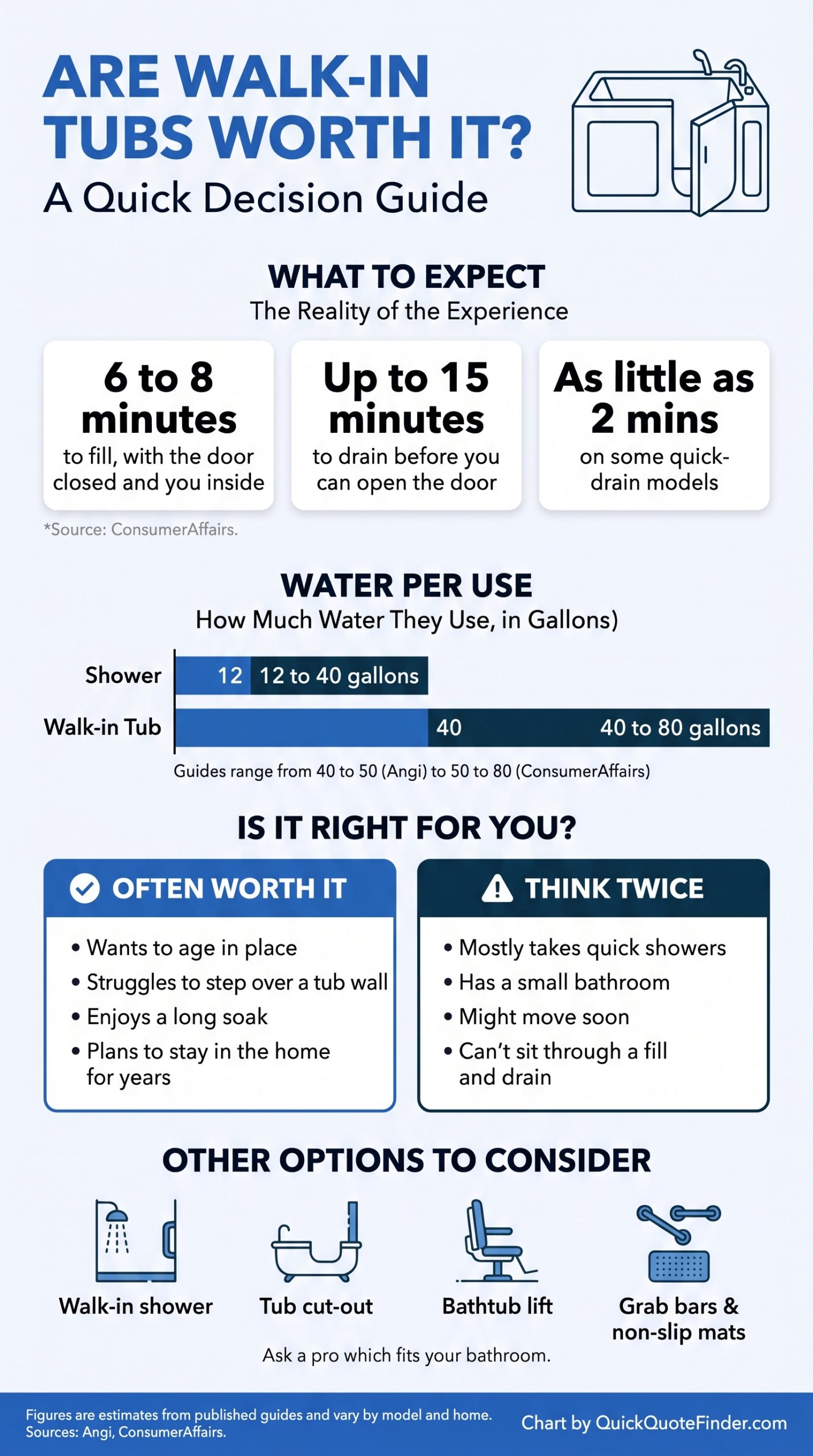
A walk-in tub is worth it if someone in your home struggles to step over a tub wall, wants to soak, and plans to age in place in their own home for years to come. It's probably not worth it if you mostly take quick showers, have a small bathroom, or might move to a nursing home or assisted living facility. If safety is your main goal, there may be some more affordable options. We'll cover it all below.
Here's the walk-in tub pros and cons list:
The Pros of a Walk-In Tub
Walk-in tubs have many benefits for the right homeowners:
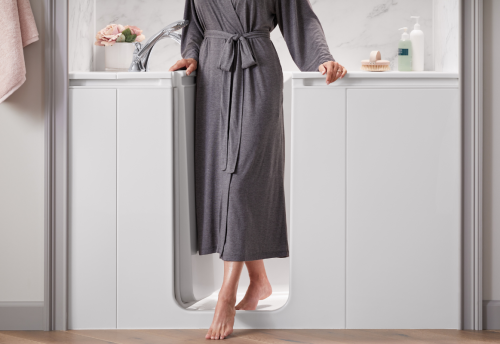
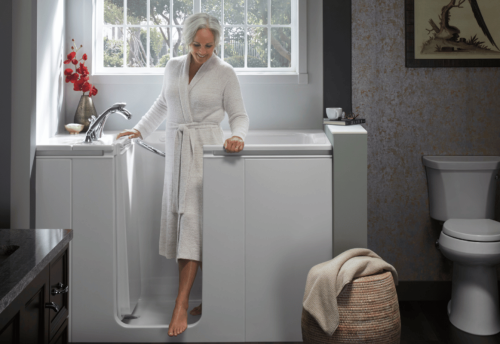
• A lower step-in. That's the whole point of a walk-in tub. You open a door and step over a short threshold instead of lifting a leg over a tall tub wall. For people with balance or joint trouble, that advantage alone is worth the investment.
• Built-in seating. If standing for too long causes fatigue or balance problems, built-in rear recline seating can improve safety during bathing instead of lowering yourself to the floor of the tub. Many models also come with grab bars and slip-resistant floors for added stability measures.
• A deeper, more comfortable soak. Most walk-in tubs hold an estimated 2 to 4 feet of water, compared to about 1 foot in a standard tub. The person bathing can submerge their body in the water while staying seated comfortably upright, instead of lowering themselves to the floor.
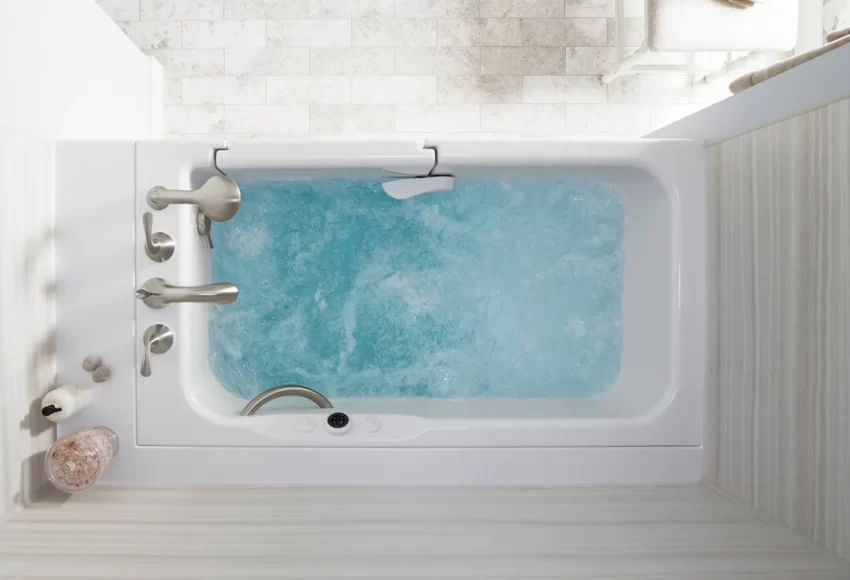
• Hydrojet options for sore joints. Some walk-in tub frames have the option to add hydrotherapy jets or heated seats, which are reported to ease stiff joints, though that isn't a medical promise.
• Independence. Someone who needed help bathing may be able to do more on their own. That alone makes a walk-in tub worth it for people who want to keep their independence and age in their home.
• Long lifespan. Consumer guides cite a lifespan of 15 to 20 years, or sometimes up to 30 with good care. Though, these are general estimates. Refer to your manufacturer's guidelines for an accurate timeline of the service life.
The Cons Nobody Likes to Mention
Here are some parts of the sales pitch most resources skip:
• You have to sit through the fill and the drain. Here's the question people ask most: do you have to sit in a walk-in tub while it fills? Yes. The door has to be closed and sealed before water goes in. Most tubs fill after you're already inside. That fill time can take between six to eight minutes, and drain times, as long as 15 minutes. (There are some quick-drain models available.) You can't open the door until the tub is empty. If you're cold, tired, or in a hurry, that wait can feel long.
• It uses a lot of water. Published guides don't agree here, so treat this as a range. Angi puts walk-in tubs at 40 to 50 gallons. ConsumerAffairs says 50 to 80 gallons per fill. Both list showers at roughly 12 to 40 gallons. That's a lot of hot water. A smaller water heater may not keep up, so ask about it before you buy.
• Installation isn't always a simple swap. A walk-in tub is bigger and heavier than a standard tub. It may need new plumbing, a new electrical circuit for jets, or a stronger floor. Most installations take one to three days, but extra work can add time and cost.
• Leaks and upkeep. The door seal is the biggest weak spot and can leak over time. A good installer and a well-made tub can lower the risk. Protect yourself from the risk by asking about the warranty on the door and seal.
• It can feel small. The built-in seat takes up room inside the tub. Taller people may find it cramped.
• Resale is a question mark. People often ask, does having a walk-in tub devalue your home? There's no guarantee either way. A walk-in tub may add value in a neighborhood with many older adults, but might not appeal to families with younger children. If you plan to sell in a few years, think about that first.

Cost Considerations
Walk-in tubs are no small investment. Our walk-in tub cost guide breaks down the numbers. If funding is the hurdle, see our guide on whether Medicare covers walk-in tubs.
Who a Walk-In Tub Is Right For
A walk-in tub makes the most sense for:
• Older adults who want to stay in their homes.
• People with arthritis or chronic pain who enjoy a warm soak.
• People recovering from an injury.
• Households planning other accessibility upgrades.
• Anyone who bathes with a caregiver's help and wants a safer setup.
You can find more on this in our guide to walk-in tubs for seniors and our page on walk-in tub features.
Who a Walk-In Tub Might Not Be Right For
You might be happier with something else if:
• You mostly take quick showers.
• You can't sit comfortably through a fill and a drain.
• You have limited bathroom space.
• You might move in a few years.
• You or someone in your home may try to climb out before the tub drains. That's a safety risk.
• Your goal is safety, not soaking.
Alternative Safety Options
Before you go all in on a walk-in tub, take a second to consider some of your other options. If safety is your top priority, there may be a cheaper way to get there.
• A walk-in shower or tub-to-shower conversion. If cost is a driving factor in your decision, you may do better converting a tub into a walk-in shower with a seat. You skip the fill-and-drain wait. Our walk-in shower page is a good place to start.
• A tub cut-out. This adds a low door to the side of your existing tub.
• Small accessibility upgrades. Grab bars, non-slip mats, shower chairs, and bathtub lifts cost much less than a full walk-in tub installation.
For some homes, one of these gets you 90% of the safety for a lot less money. For others, only a walk-in tub will do. That's why it helps to have someone look at your actual bathroom.
How to Decide
Still not sure if a walk-in tub is worth it for you? Ask yourself these questions:
• Who will use it? Is the main user someone who struggles with a regular tub?
• Will they use it? Do they enjoy a long soak, or do they prefer a quick shower?
• How long will you stay? Plan on years, not months.
• Does your home fit? Check bathroom space, plumbing, and your water heater.
• Is there a simpler fix? Would a walk-in shower or grab bars solve the real problem?
If you answered yes to the first four and no to the last, a walk-in tub is likely worth a closer look.
Ask a Professional
Every home is different, and online guides can only go so far. Before you commit, ask a pro to come and look at your bathroom. While they're there, ask them these questions:
• Do my plumbing and water heater work with this tub?
• How long will the install take, and what could add to it?
• What does the warranty cover, especially the door seal?
• Would a walk-in shower solve my problem for less?
• How long do fill and drain take on the model you'd recommend?
A good contractor will answer these plainly and will tell you if a walk-in tub isn't the right call.
QuickQuoteFinder can match you with one trusted local pro. Tell us a little about your home and where you live, and we'll find a walk-in tub installer in your area! They'll look at your space and give you a straight answer, with no pressure to move forward until you're ready you're making the right choice.
Get Matched With a Trusted Walk-In Tub Pro
Answer a few questions about your home, and we'll match you with one trusted walk-in tub installer in your area for free.
1
2
3
Answer Some Questions
Enter Your Zip
Code
Match With a Local Pro
Receive a free, no-obligation walk-in tub quote from a professional in Ohio.
Frequently Asked Questions
This article is general information. Prices, water use, and timelines vary by model and home. Confirm details with a licensed pro.