
HVAC Replacement Cost in 2026: A Brand-Neutral Guide
The average HVAC replacement cost in 2026 can range from a few thousand to almost $30K. Where your bill falls depends on your home’s size, the type of HVAC system, the efficiency level, and whether your ducts need work.
This guide breaks down the cost factors in simple terms, so you can figure out exactly what you need and what to ask for to help save on your HVAC replacement.
QuickQuoteFinder makes getting an estimate easy. Tell us about your project, and we’ll match you with a local HVAC contractor serving your area. Get My Free HVAC Quote →
What Does an HVAC Replacement Cost in 2026?
In 2026, nationwide consumer data reports that an HVAC replacement can range from $6,000 for an individual unit to $28,000 for a full system replacement. That range is wide, and it exists because "HVAC" can mean many different things.
"HVAC" stands for the system's capabilities: heating, ventilation, and air conditioning. It helps to understand what makes up an HVAC system before jumping into replacement costs.
The easiest way to think about it is in tiers:
Tier 1: The system configuration — how the overall HVAC is set up.
Tier 2: The equipment — what you actually buy and install; most systems are made of one or more of these.
Tier 3: The pieces — the parts inside the equipment that connect the entire system.
When you need HVAC work, understanding the elements that make up the system can help you determine what actually needs servicing and a ballpark cost range before you get a quote.
Cost to Replace an HVAC System, by Configuration
HVAC systems are set up in four common ways:
1. Ducted split system: one unit sits outside and one inside, and air travels through ducts to every room.
2. Ductless (mini-split): an outdoor unit connects to one or more wall-mounted indoor units without ducts, so each room or zone gets its own control.
3. Packaged system: everything is in one cabinet, usually on the roof or beside the house.
4. Hybrid or dual-fuel: a heat pump paired with a gas furnace. The system uses whichever is more efficient or cheaper to run for the current weather.
Cost to Replace an HVAC System, by Equipment
Within each system configuration, there are several different equipment types:
• Furnace: heats the home via natural gas, propane, oil, or electric heating components.
• Central air: cools the home by pushing indoor heat outside.
• Ducted heat pump: heats and cools the home by moving heat in or out of the house.
• Ductless mini-split: heats or cools individual rooms or zones without ductwork.
• Geothermal heat pump: uses the steady temperature underground through buried piping.
Cost to Replace an HVAC System, by Piece
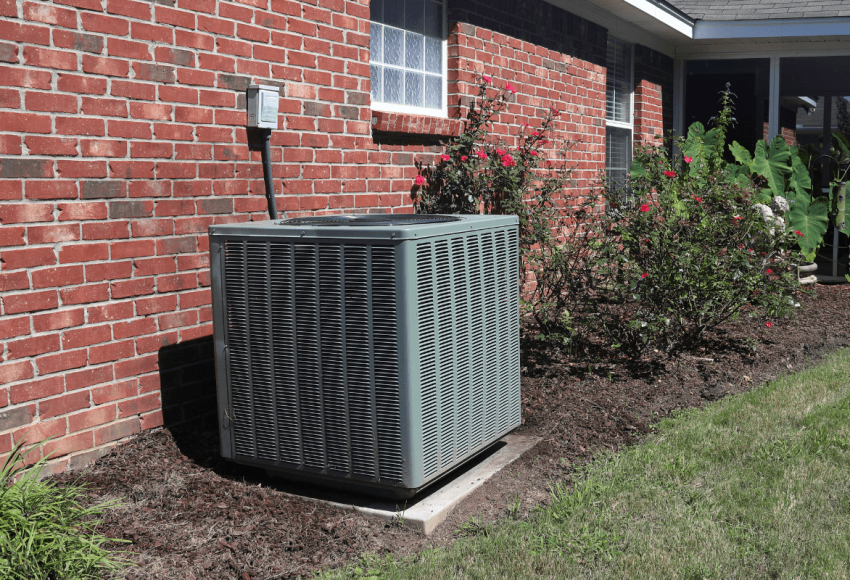
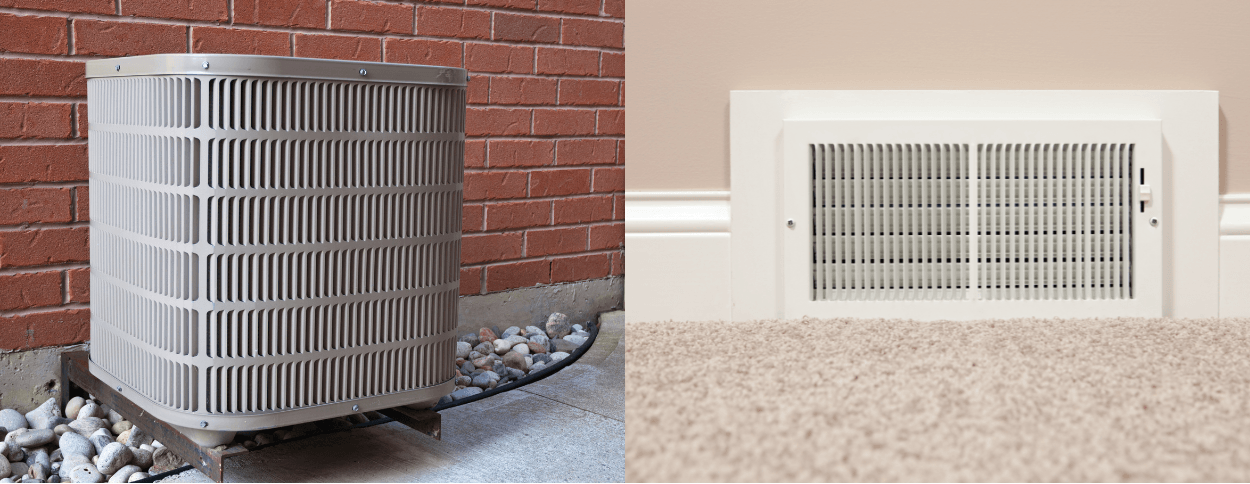
Most homes use a ducted split system. It has two main parts: an outdoor unit (an AC or a heat pump) and an indoor unit (a furnace or an air handler). Ducts carry the air to each room, and a thermostat tells the system when to run.
Some of these parts show up more than once in the cost chart below, because they count on two levels. The furnace and the outdoor unit are pieces of equipment, but they’re also the two major parts of a split system. The ducts and thermostat are different. They belong to the whole system, not to any one piece of equipment.
You can replace one part or both. Replacing only one is possible, but the two units are designed to work as a pair. A mismatched pair can run less efficiently. A pro can tell you whether replacing just one makes sense for your home.
Then there are some line items people forget:
• Permits. Often $100 to $250 for a basic job, and higher if ductwork is involved.
• Electrical or other upgrades. Older homes sometimes need them to handle a new system.
AC Unit Cost by Home Size
Size is one of the biggest drivers of HVAC replacement costs. A bigger home needs a bigger system, and a bigger system costs more to buy and install.
AC size is measured in cooling capacity “tonnage," not overall weight. A rough guide from published sizing charts:
Climate, insulation, windows, and ceiling height can all change what your home needs. A good installer should size the system based on your actual house, not just its square footage.
These are national ranges. Your local price will vary with labor rates and what’s available near you.
Want to request your local rates? Use QuickQuoteFinder to match with a local contractor for free. Get My Local HVAC Quote →
Does HVAC Efficiency Change the AC Unit Cost?
A good question, and the answer is yes. Higher efficiency costs more up front. An HVAC unit's efficiency is rated in SEER (or SEER2 on newer units). A higher number means a higher efficiency rating (and the higher the cost).
A more efficient system can lower your monthly bills, but whether it pays back depends on how much you run it and your local energy prices. A pricier unit isn’t automatically the better buy.
What Pushes HVAC Replacement Costs Up (or Down)
When two homes the same size get very different quotes, it’s usually because of one of these factors:
1. Ductwork condition. Good ducts keep the bill down. Bad ones add thousands.
2. Efficiency level. See the tiers above.
3. Equipment type. AC only, furnace only, both, or a heat pump.
4. Power type. Whether your system runs on gas or electric.
5. Access. Tight attics and crawl spaces take more effort and labor.
6. Local labor and permit costs. These swing by region.
7. Timing. Replacing in the middle of a heat wave or cold snap can limit your options and your leverage.
Can You Lower the Bill?
Lowering your HVAC replacement bill isn't always possible, but here are a few honest ways to scale back:
• Check for rebates and tax credits. Rebates and credits can cut costs by hundreds or even thousands of dollars. Programs change, so check your utility and your state before you buy. Don’t assume one applies.
• Don’t oversize. Bigger isn’t better. An oversized AC can cycle on and off too often and cool unevenly.
• Fix ducts only if they need it. Ask for a clear reason.
• Plan ahead, if you can. A system that’s aging but still running gives you time to shop calmly and do your research before you jump into buying a new system.
How to Read Your HVAC Quote
Whatever number you get, ask what’s in it. A solid price should spell out:
• The equipment make, model, and size
• The efficiency rating
• Labor and installation
• Ductwork or electrical work, if any
• Permits
• Warranty terms on parts and labor
If something’s vague, ask. A good pro won’t mind.
Find a Trusted HVAC Professional For Your Home
Answer a few questions about your project, and we'll match you to a top-rated HVAC contractor in your area for free.
1
2
3
Answer Some Questions
Enter Your Zip
Code
Match With a Local Pro
Receive a free, no-obligation quote from an HVAC contractor in Ohio.
Frequently Asked Questions
Get Matched With an HVAC Professional Near You
Knowing the numbers helps, but the person doing the work matters just as much. Answer a few quick questions, and we’ll match you with one trusted local HVAC pro who can look at your home and give you a real price.
Completely free, with no-obligation.
